
Documents
Plans drafted from the evidence
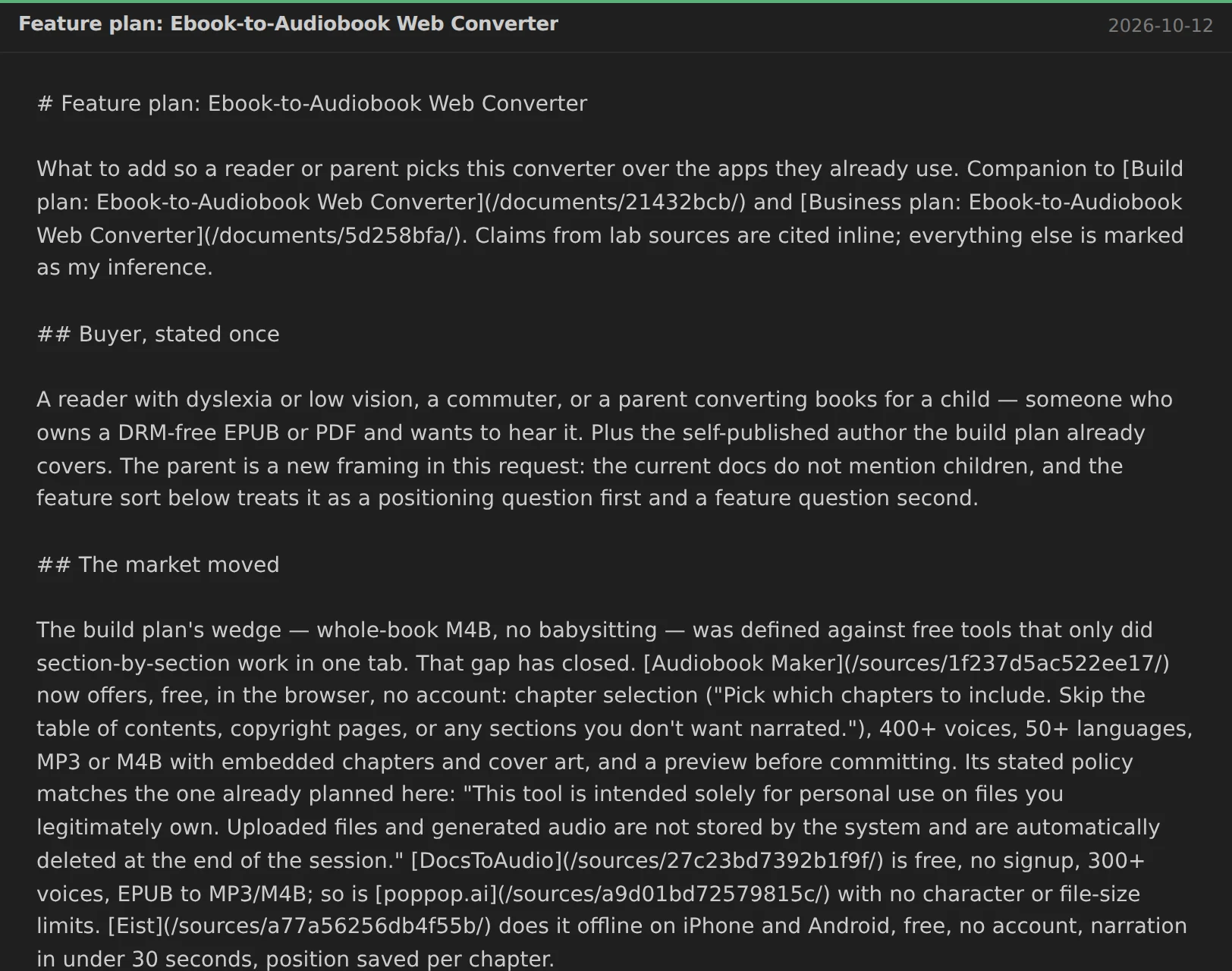
Every competitor it names links to the page it read. Edit anything; it saves as you type.
Hunting Apps searches the web for problems people already pay to solve, checks who sells a solution and at what price, and hands the ideas that hold up to your coding agent.

More tools like my ebook-to-audiobook converter.
I read that as From a GitHub engine: a free engine that only runs from code, with an interface people would pay for. You’d get up to three researched candidates. Shall I start?
Workflow
AI agents do the legwork across the web. You decide what gets built.
Searches the web for signals
Who sells it, at what price
Start, narrow, or stop
Brief pushed to your repo
Hunts
Pick what you are starting from. Each kind of search runs its own plan and hands back its own result.


Projects
A candidate you keep can become a project: its documents, the sources behind them, and a chat that has read both.
Documents
Every competitor it names links to the page it read. Edit anything; it saves as you type.
Chat
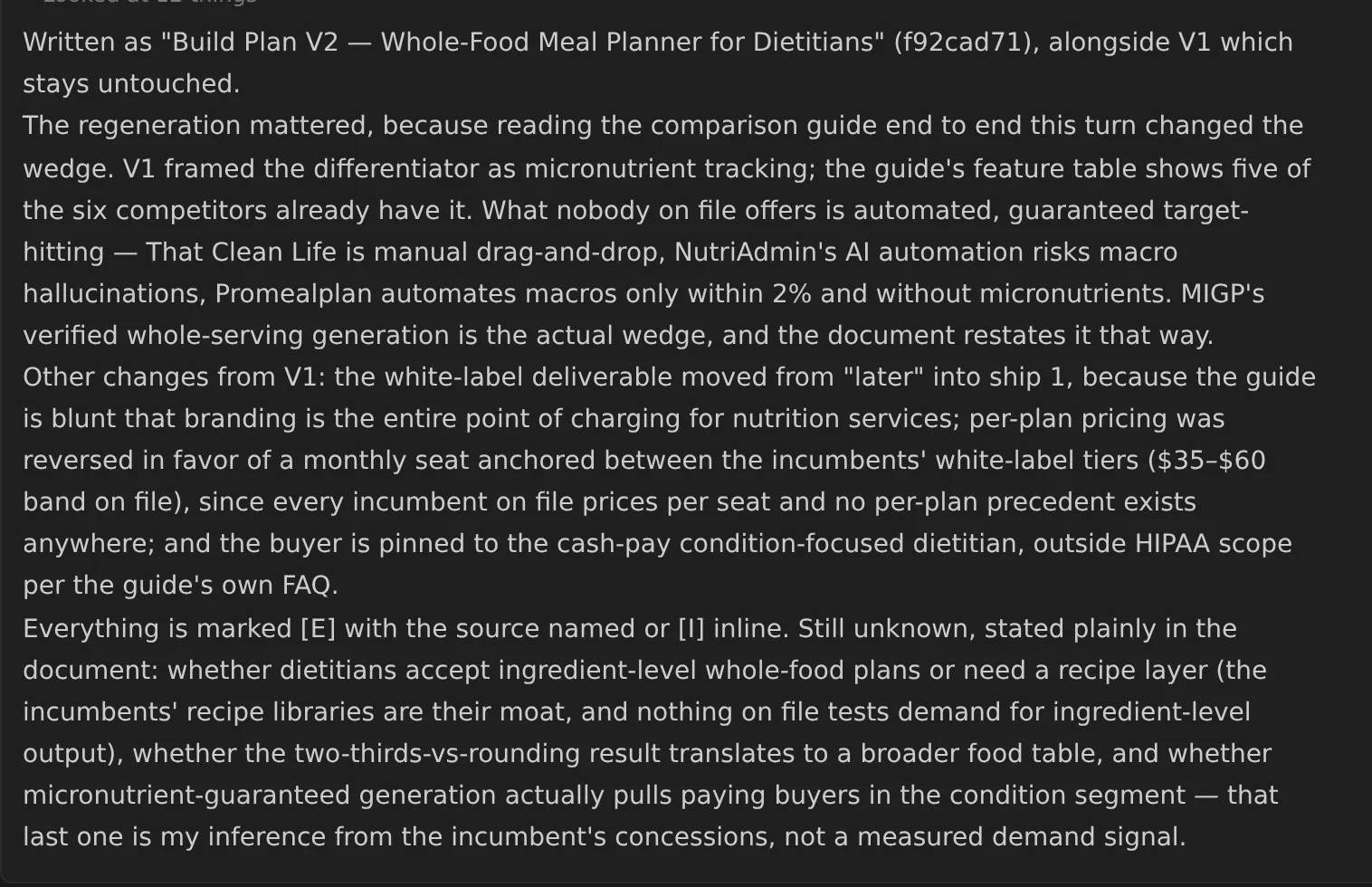
It reads what is on file first, searches the web when that is not enough, and marks what it inferred. Attach your own files and it reads them too.
Handoff
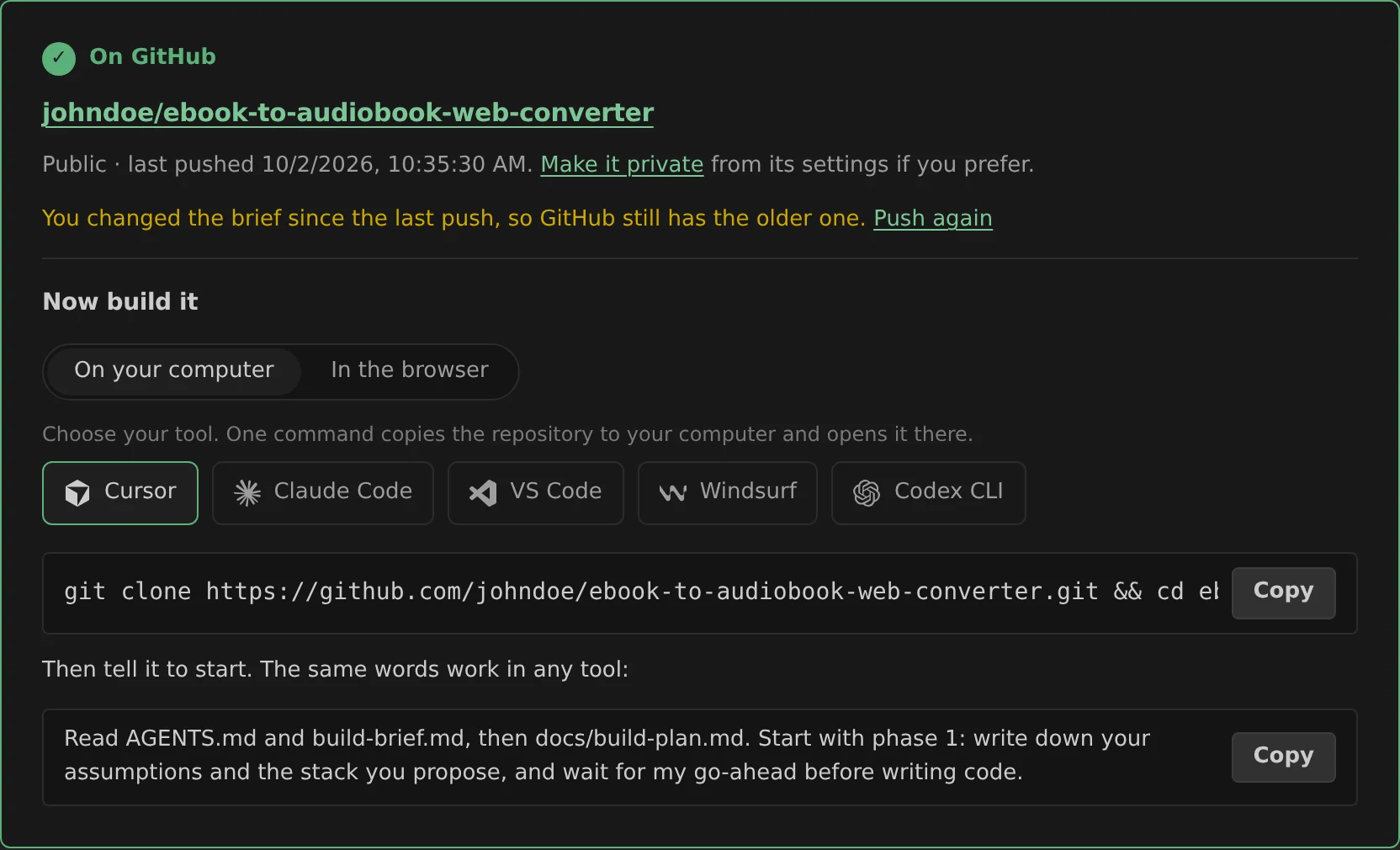
The brief and a build plan, pushed to your own GitHub.
Pricing
To start
Free
A starter allowance on every new account.
After that
Pay per run
No subscription. Top up when you need more.
Your balance, the price of every action and each charge are on your account page.
FAQ
Hunting Apps is an AI research tool for deciding what software to build. Its agents hunt the web for problems people already pay to solve, check who already sells a solution and at what price, and return a verdict (start, narrow or stop) with every source attached.
People who can build with AI coding tools such as Claude Code, Cursor, Codex, Replit or Bolt, but do not know what is worth building. That includes indie hackers, developers looking for a side project, and non-coders.
A list gives everyone the same ideas. Hunting Apps checks each idea against the market and what you pinned down, can tell you no, and shows every page it read so you can check the reasoning.
You pick a kind of search: from anywhere, from a proven app or from a GitHub engine when you have nothing yet; or size up a market, improve your product or find a component when you do. You can add your own words and pin down what must hold, such as the field, the buyer and what to rule out. Pick no kind and the agent says which one it reads and waits. It then writes a numbered plan and works through it, and you can change the direction as it works.
That is REA, Reverse Engineer Anything: it tells you whether one is worth rebuilding. It finds apps with proven demand and real weaknesses, or checks one you name, and writes a rebuild case from public pages only: the listing, pricing, docs and reviews. It never downloads or decompiles the app, and the case says not to copy its name, brand or icon.
Yes. Reasoning models make the judgement calls, and faster ones read and condense the sources. If a provider fails mid-run, the run continues on another and still finishes. Every page it read is kept with the run, so any claim can be opened and checked against its source. Ideas from Go further are marked invented and are never counted as evidence.
You can try a hunt and develop its results without a card. After that you pay per run and top up when you need more; there is no subscription. A run's price is held before it starts, only what it used is charged, and a run that fails is refunded. Your account page lists every price, your balance and each charge.
It becomes a project with its documents, sources and an AI chat. When you are ready, Hunting Apps writes a build brief and pushes it to a public repository on your own GitHub account, with an AGENTS.md and a build plan your coding agent can start from.